Featured
How Trustworthy Providers Uphold Ethical Compliance Funda...
Some Known Incorrect Statements About Ongoing Guidance an...


Unknown Facts About Tools Offered for Your Debt Relief Journey
Table of Contents
The catch is that not-for-profit Bank card Financial debt Forgiveness isn't for every person. To qualify, you need to not have actually made a settlement on your credit report card account, or accounts, for 120-180 days. Furthermore, not all financial institutions participate, and it's just supplied by a few not-for-profit credit score counseling agencies. InCharge Financial obligation Solutions is among them.
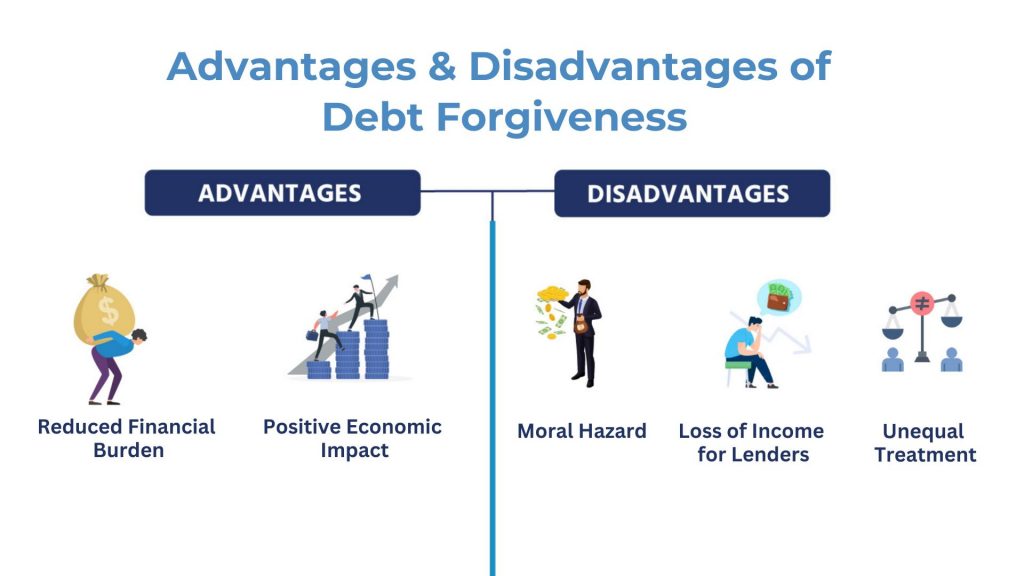
The Credit Rating Card Mercy Program is for people that are so far behind on credit history card repayments that they are in severe financial difficulty, possibly dealing with bankruptcy, and do not have the earnings to catch up."The program is especially designed to aid customers whose accounts have been billed off," Mostafa Imakhchachen, client treatment professional at InCharge Debt Solutions, claimed.
Creditors that get involved have concurred with the not-for-profit credit score counseling firm to accept 50%-60% of what is owed in fixed regular monthly repayments over 36 months. The set repayments indicate you understand precisely just how much you'll pay over the settlement duration. No interest is billed on the equilibriums throughout the payback period, so the settlements and amount owed don't change.
It does reveal you're taking an active duty in reducing your financial debt., your credit scores rating was currently taking a hit.
Facts About Emerging Regulations That May Change Debt Relief Availability Revealed
The agency will certainly pull a credit scores record to recognize what you owe and the degree of your difficulty. If the mercy program is the finest option, the counselor will certainly send you an arrangement that information the strategy, including the quantity of the monthly payment.
If you miss out on a repayment, the arrangement is nullified, and you should leave the program. If you think it's a good option for you, call a counselor at a nonprofit credit report counseling firm like InCharge Debt Solutions, that can answer your concerns and assist you establish if you certify.
Because the program allows consumers to choose much less than what they owe, the creditors that get involved want reassurance that those who take advantage of it would certainly not be able to pay the sum total. Your bank card accounts likewise must be from financial institutions and charge card companies that have accepted participate.
The Basic Principles Of Digital Tools Is Making Debt Relief Better
If you miss out on a repayment that's simply one missed repayment the agreement is ended. Your financial institution(s) will terminate the strategy and your balance goes back to the original amount, minus what you've paid while in the program.
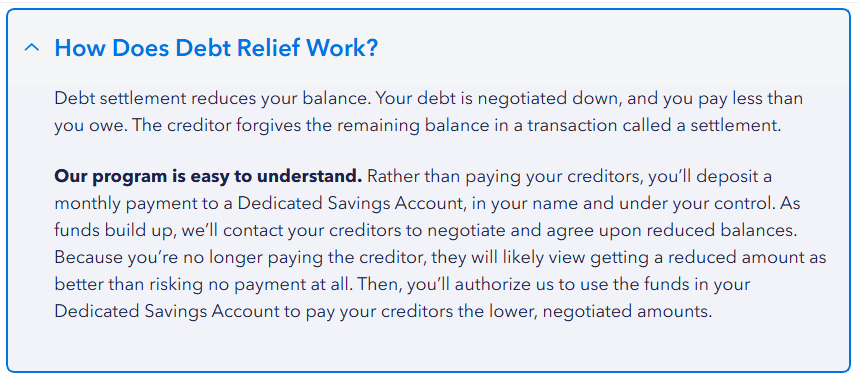
With the forgiveness program, the creditor can rather pick to keep your financial obligation on guides and recover 50%-60% of what they are owed. Nonprofit Bank Card Financial obligation Mercy and for-profit financial debt negotiation are similar because they both give a way to settle charge card financial debt by paying much less than what is owed.
Bank card mercy is designed to set you back the consumer less, settle the debt quicker, and have less downsides than its for-profit counterpart. Some essential areas of distinction in between Bank card Financial obligation Mercy and for-profit financial obligation settlement are: Credit score Card Debt Mercy programs have partnerships with creditors that have consented to participate.
Some Known Factual Statements About Comparing Bankruptcy Counseling Options to Choose the Ideal Match
Once they do, the reward duration starts immediately. For-profit financial obligation negotiation programs bargain with each lender, normally over a 2-3-year period, while interest, charges and calls from financial debt collection agencies proceed. This means a larger hit on your debt record and debt rating, and an enhancing equilibrium until negotiation is completed.
Credit History Card Debt Forgiveness customers make 36 equivalent regular monthly settlements to remove their debt. For-profit financial debt settlement clients pay into an escrow account over a negotiation period towards a swelling amount that will certainly be paid to lenders.

Table of Contents
Latest Posts
How Trustworthy Providers Uphold Ethical Compliance Fundamentals Explained
Some Known Incorrect Statements About Ongoing Guidance and Check-In Programs
The Only Guide for State Resources for Financial Assistance
More
Latest Posts
How Trustworthy Providers Uphold Ethical Compliance Fundamentals Explained
Some Known Incorrect Statements About Ongoing Guidance and Check-In Programs
The Only Guide for State Resources for Financial Assistance